
Modern Roman Circus: The Architecture of Mass Distraction and Social Control
An in-depth exploration of “bread and circuses” from ancient Rome to the digital age, examining how media spectacle, professional sports, and algorithmic distraction manufacture consent, normalize inequality, and erode civic awareness—transforming active citizens into passive spectators in modern society.
The historical continuity of state-sponsored distraction is perhaps most effectively summarised by the Latin phrase panem et circenses, or “bread and circuses.” Coined by the Roman satirist Juvenal in the late first century CE, the term originally decried the erosion of civic duty among the Roman populace, who had allegedly traded their political liberty for the superficial appeasement of free food and public entertainment.
In the contemporary era, this mechanism has evolved into the modern Roman circus—a sophisticated system of mass distraction where professional sports, sensationalised media, and digital stimulation serve to stabilise social order, normalise extreme economic inequality, and divert public attention from systemic political and economic crises.
Table of Contents
The Historical Foundation of Panem et Circenses
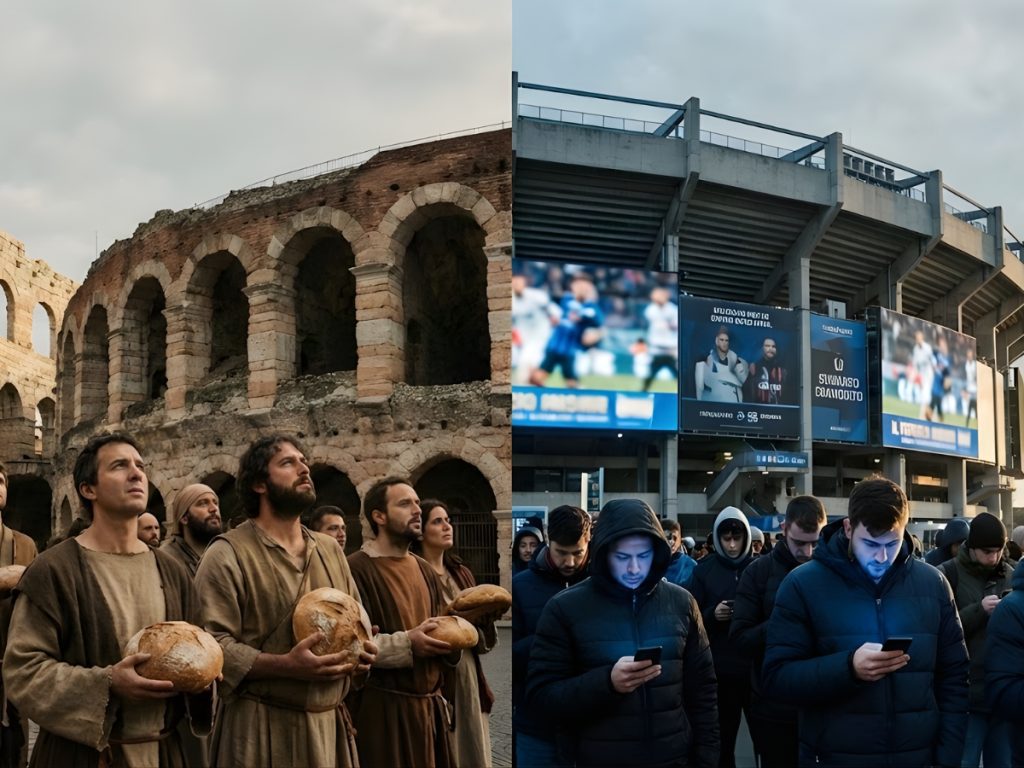
To understand the modern Roman circus, one must first analyse the structural purpose of the original Roman circus. In ancient Rome, the provision of grain (the annona) and the organisation of lavish games (the ludi) were not acts of benevolence, but calculated political strategies.
Roman emperors used these spectacles to maintain social peace, offering a release valve for public tension while simultaneously building political popularity. Julius Caesar, during his rise to power, famously borrowed enormous sums to stage extravagant games involving hundreds of gladiators—an investment in political propaganda that helped secure his authority and future repayment of debts.
Architecture, Scale, and the Saturation of Public Consciousness
The physical architecture of Roman entertainment venues reflected a desire for total public immersion. Structures such as the Circus Maximus and the Colosseum were designed not merely as arenas, but as machines of mass attention.
At its height, the Circus Maximus could seat up to 350,000 spectators, functioning as the ultimate stage for the performance of imperial power. Over time, these spectacles grew increasingly excessive. Under Augustus, games were organised in which thousands of men fought thousands of wild animals, creating a level of sensory overload that crowded out political reflection and masked deeper problems, such as infrastructure decay and political corruption.
Ancient and Modern Forms of Bread and Circuses
| Component | Ancient Roman Manifestation | Modern Societal Equivalent |
|---|---|---|
| Bread (Panem) | Grain Dole (Annona), Public Baths | Welfare systems, social security, fast food |
| Circuses (Circenses) | Gladiatorial combat, chariot races | Professional football, reality TV, social media |
| Political Goal | Appeasement, preventing revolt | Manufacturing consent, political apathy |
| Mechanism | Physical venues (Colosseum) | Digital platforms, broadcast media |
| Participant Status | Enslaved people, gladiators | Professional superstars, influencers |
Psychological Control and the Illusion of Participation

The psychological impact of panem et circenses was the creation of a manufactured dependency. By satisfying basic survival needs and providing constant stimulation, Roman elites ensured that the population would not revolt from hunger or boredom.
Crucially, the system created an illusion of participation. Citizens could shout, cheer, and express emotion within the spectacle, while their actual political power—the authority to appoint leaders or command armies—was quietly transferred to autocratic rule.

Juvenal’s critique captures this historic transition from active citizen to passive spectator, a shift that finds a striking parallel in modern societies, where entertainment culture simulates engagement while real civic agency steadily erodes.
Football as Modern Roman Circus: The Architecture of the Arena
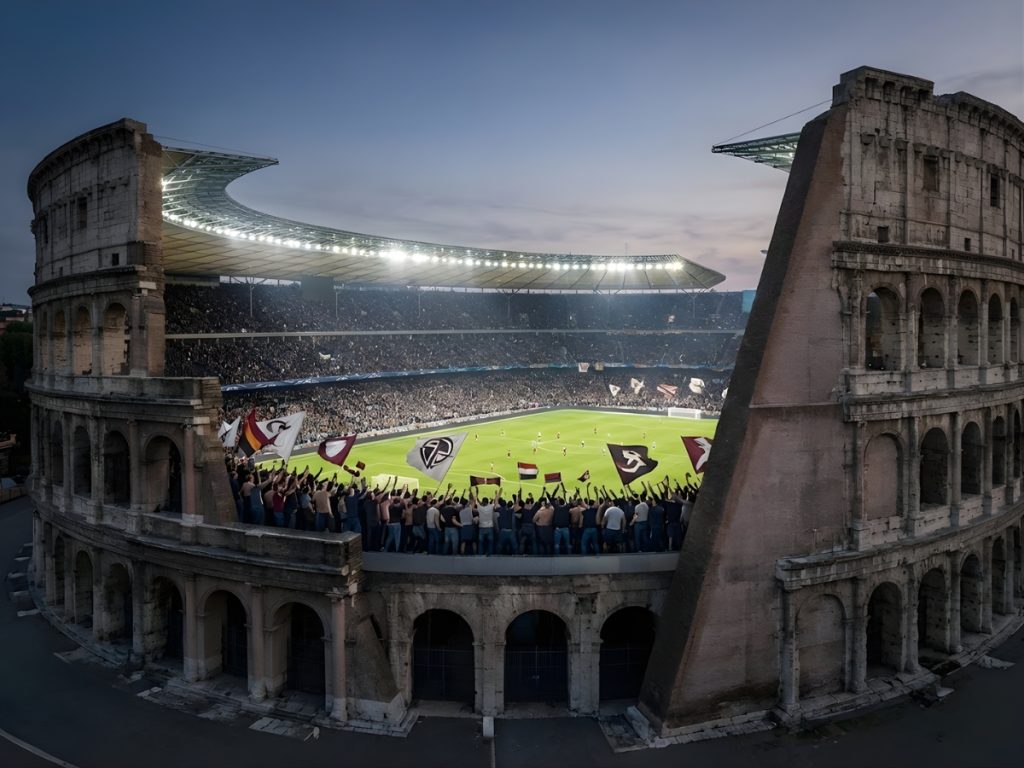
In the modern context, professional sports—specifically association football and American football—function as the primary continuation of the Roman circus. The modern stadium is a direct evolution of the Roman Colosseum, designed to concentrate the emotional and physical energy of the masses into a controlled, commercialised spectacle.
The “tribal passions” once elicited by the Roman chariot factions—the Blues, Greens, Reds, and Whites—are now channelled into fanatical loyalty for professional clubs. This sports tribalism diverts political energy into harmless rivalries, where a televised debate about a referee’s call replaces substantive public discourse on housing policy, wage stagnation, or fiscal reform.
Football as a Sociological “Safety Valve”
The sociological function of football as a modern Roman circus lies in its ability to act as a “safety valve” for public discontent. The violence historically witnessed in the arena—whether gladiatorial combat in Rome or high-impact collisions in the NFL—serves as a symbolic substitute for the violence that might otherwise be directed against the ruling class.
Sociological analysis suggests that modern sporting contests create identity markers that replace civic, political, or class-based identities. When a population is emotionally invested in the spectacle, it has less energy and focus to demand systemic change.
The Grandeur of the Modern Stadium
Modern stadiums replicate the structure and psychological intent of ancient amphitheatres. They are frequently constructed with public subsidies, reflecting a modern version of the Roman practice in which elites gained prestige by sponsoring games at public expense.
The sheer scale of events such as the Super Bowl, FIFA World Cup, and the Olympics reinforces nationalism and consumerism, functioning as modern Circus Maximuses. Military flyovers, halftime spectacles, and mass branding reinforce existing social hierarchies while presenting them as moments of collective celebration.
Furthermore, the “spectacle of outrage” marketed within these arenas sustains a business model that prioritises commercial returns over human flourishing. While Roman games used public executions to demonstrate state power, modern stadiums sell the drama of conflict through manufactured rivalries and sensationalised punditry. This fixation keeps public attention locked on the match while entrenched homelessness, displaced populations, and international conflicts remain marginalised.
The Economics of the Spectacle and the Normalisation of Inequality

A central feature of the modern Roman circus is the normalisation of extreme economic inequality. The astronomical salaries of elite athletes and celebrities are framed as the natural outcome of a meritocratic system, producing a narrative of “justified inequality” that the public accepts in exchange for entertainment.
This framing suggests that superstars deserve their wealth because their productivity is highly visible and easily measured, masking the expanding gap between the economic elite and the average worker. Inequality is not merely tolerated—it is celebrated as proof that the system works.
Illustrative Salary and Income Comparisons
| Category | Earnings / Status | Ratio to Median Income |
|---|---|---|
| Top NFL Quarterback | Major contract extension; elite net worth | ~1,350 : 1 |
| Top NBA Draft Pick | Multi-million annual salary | ~254 : 1 |
| NBA Team Mascot | High six-figure salary | ~13 : 1 |
| Average American Individual | Median annual income | 1 : 1 |
| Bottom 20% Net Worth | Minimal marketable assets | 1: 1 |
This disparity reflects wealth concentration, not merely income differences. The top fraction of households controls a disproportionate share of total wealth, while the bottom half holds a negligible portion. The entertainment-driven society promotes “rags to riches” stories, especially athletes rising from poverty, reinforcing the illusion that the system is fair and accessible to all.
This meritocracy myth pacifies those at the bottom of the economic hierarchy by framing inequality as a consequence of individual failure, rather than structural barriers.
Inequality, Metrics, and the Illusion of Fair Competition
Economic inequality within professional sports can be quantified using standard measures such as the Gini coefficient, applied to team salary distributions:
Studies of elite football leagues suggest that while high salary disparity does not always reduce team performance, it creates a sense of glamour and intrigue around wealthy clubs. This further distances the spectacle from the lived reality of the ordinary worker.
The focus on superstar culture allows powerful institutions to redirect public anger into controlled debates. Instead of discussing wage stagnation or labour rights, media discourse revolves around whether a player’s performance justifies a multi-million-dollar bonus—a perfect example of how the modern Roman circus transforms civic frustration into entertainment.
Media Sensationalism and the Manufacturing of Consent

The modern Roman circus is disseminated through a media apparatus that follows the “Propaganda Model” identified by Edward Herman and Noam Chomsky. This model argues that mass communication media serve an ideological function through five structural filters: ownership, advertising, sourcing, flak, and the “common enemy” doctrine. Within this system, entertainment and “infotainment” are used to manufacture consent by narrowing the range of acceptable thought and marginalising dissent.
Media networks realise that superficial forms of mass entertainment are more profitable than investigative journalism because complex narratives “interfere with the public’s buying mood.” Consequently, reporting often focuses on emotionally charged but politically irrelevant issues—such as where people go to the bathroom or whether an athlete stands for the national anthem—issues that have zero impact on the power of political and economic elites.
This manufactured outrage “sucks a lot of air out of the room,” distracting the public from the reality that structural discrimination remains intact and that wage-earning workers possess minimal political representation.
The Spectacle of the Image
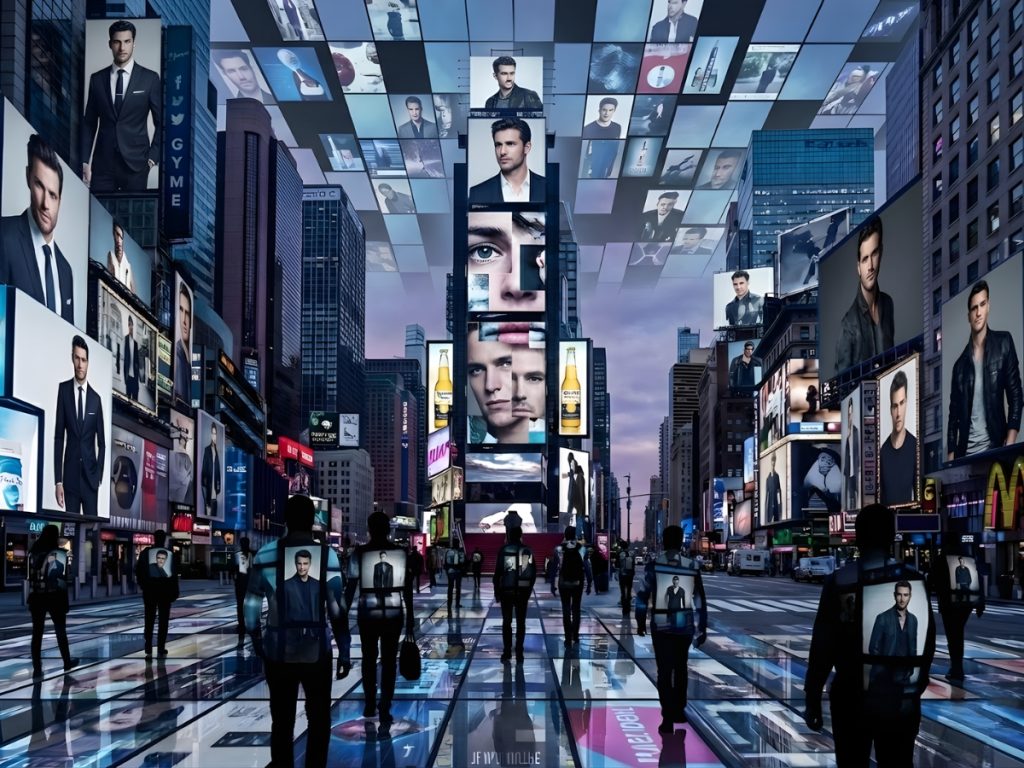
Guy Debord, in The Society of the Spectacle, argues that modern life presents itself as an “immense accumulation of spectacles,” where everything directly lived has been replaced by representation. In this spectacular society:
- “Being” is replaced by “having”
- “Having” is replaced by “appearing”
This transformation is visible in the way brands, celebrities, and social media identities are marketed. The image of the thing becomes more valuable—and more “real”—than the thing itself.
The spectacle functions to manufacture alienation. The more a spectator contemplates dominant images of need, the less they actually live their own life. This is the core mechanism of media and mass control: a population consuming images of lifestyle, fashion, and “reality” becomes exiled from its own existence, passively observing representations while the real conditions of life are managed by an “invisible government.”
Trivial Content, Digital Distractions, and “Brain Rot”

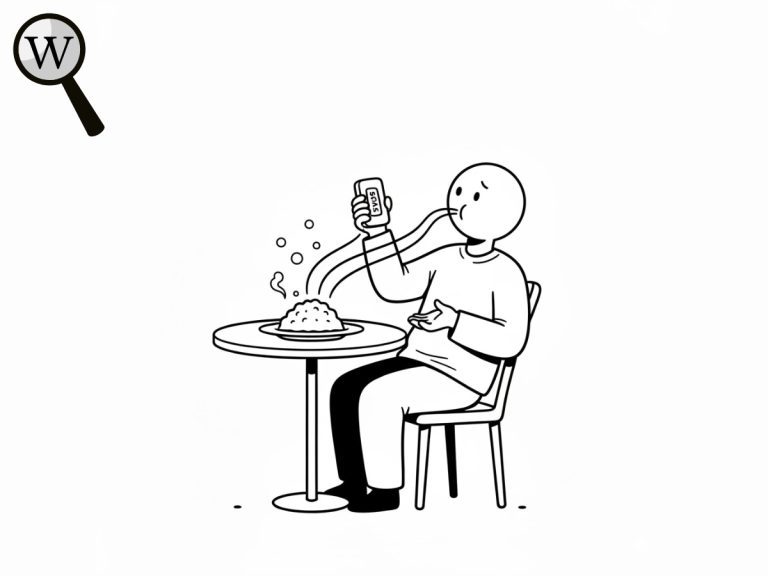
The evolution of the Roman circus into the digital age has produced a psychological condition known as “brain rot.” This term describes the deterioration of mental and intellectual capacity caused by the overconsumption of trivial, unchallenging digital content.
This condition is driven by dopamine-based feedback loops deliberately designed by digital platforms to capture and hold attention at any cost.
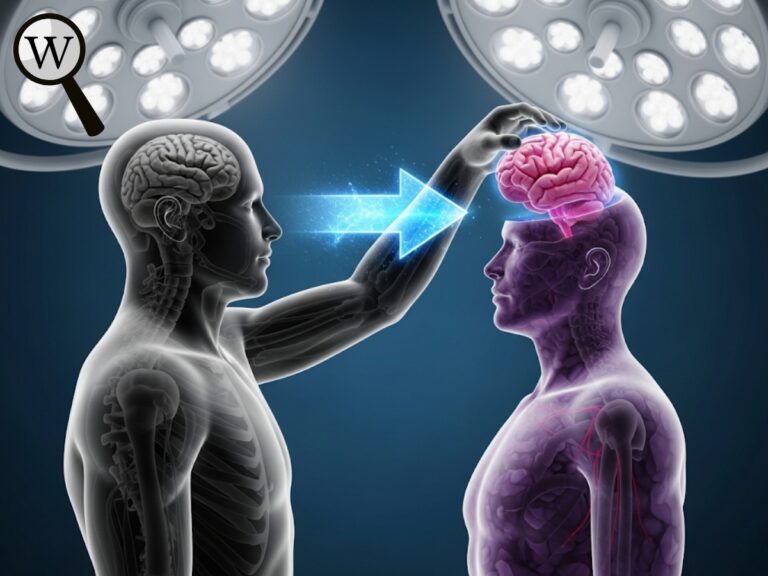
Neurobiological research shows that constant digital stimulation and doomscrolling:
- Fragment attention
- Reduce sustained focus
- Weaken the prefrontal cortex, responsible for decision-making, planning, and problem-solving
The result is a population with minimal cognitive processing, reduced deep analytical thinking, and diminished capacity for long-term reasoning.
Cognitive Impact of Modern Digital “Circuses”
| Cognitive Area | Impact | Long-term Societal Consequence |
|---|---|---|
| Attention Span | Rewired for speed over depth; fragmented focus | Inability to engage with long-form policy or complex social issues |
| Memory | Disrupted consolidation; reliance on digital tools | Loss of historical context and collective knowledge |
| Critical Thinking | Subverted by echo chambers and confirmation bias | Susceptibility to propaganda, misinformation, and viral outrage |
| Problem Solving | Preference for instant gratification over deep analysis | Decline in innovation and civic participation |
The cultural consequences are profound. Growing dependence on digital tools reduces cognitive flexibility, making individuals less willing to engage with complexity or challenge existing beliefs. As Neil Postman warned, when serious public discourse is reduced to entertainment and “baby-talk,” society moves toward culture-death.
We do not resist this process—we choose it, fulfilling Aldous Huxley’s fear of a population that drowns truth in a sea of irrelevance.
Psychological and Sociological Aspects of Mass Distraction
Psychologically, the modern Roman circus exploits the human appetite for distraction. Entertainment culture creates cognitive overload and emotional desensitisation, reducing the capacity for critical thought. Continuous exposure to breaking news and superficial content leads to temporal discounting, where immediate gratification is prioritised over long-term social and political goals.
Sociologically, the spectacle enforces conformity through flak, norm policing, and the construction of a common enemy. As Debord noted, the system produces goods—from automobiles to television—that reinforce the conditions of “lonely crowds”: individuals isolated from one another, yet surrounded by reflections of consumerist desire.
This isolation is essential for social control. A society that does not talk to itself, but merely entertains itself, is incapable of organising for systemic change.
Algorithmic Passivity and Emotional Control
The passivity of the modern audience is not accidental. Algorithmic systems deliver content based on predicted desire, transforming the individual from an active participant into a passive consumer.
This passivity produces:
- Reduced tolerance for boredom
- Avoidance of discomfort and reflection
- Dependence on constant stimulation
Historically, boredom has been the space where creativity, self-awareness, and social consciousness emerge. By eliminating boredom, the system ensures individuals never confront the dissatisfaction of their own lives, keeping them tranquillised by the next post, trend, or spectacle.
The Spectacle as a Political Distraction: Burying Substantive Issues

The modernRomann circus is frequently used as a tactical tool to bury major legislation or scandals. Between 2022 and 2024, numerous instances occurred where sensationalised media coverage of celebrity trials or sports events coincided with the passage of significant bills or the revelation of political malfeasance. For example, while the world was engrossed in the live-streamed defamation trial of Johnny Depp and Amber Heard in 2022, substantive debates regarding the Inflation Reduction Act and the ORPHAN Cures Act—legislation designed to protect incentives for rare disease research—were largely buried in the back pages of news outlets.
Examples of Distraction and Buried Legislation
| Date / Period | “Circus” / Diversionary Event | “Bread” / Substantive Reality Buried |
|---|---|---|
| May/June 2022 | Depp v. Heard Trial Coverage | Medicare and Medicaid Fraud Prevention Act |
| 2023–2024 | Taylor Swift/Travis Kelce Media Frenzy | Building Chips in America Act, ORPHAN Cures Act |
| Late 2025 | P. Diddy / Sean Combs Arrest Scandal | National Defense Authorization Act (NDAA) for 2026 |
| Constant | Sports Betting/Fantasy League Engagement | Cost-of-living crisis, wage stagnation, housing costs |
This pattern of distraction is not necessarily a coordinated conspiracy but a result of the commercial news model’s reliance on “clicks” and “ad revenue”. When the media identifies an emotionally charged or scandalous story that generates engagement, it “sucks a lot of air out of the room,” effectively marginalising dissent and allowing the government and dominant private interests to get their messages across with minimal public scrutiny. This is the “ruse of commodity logic,” where the visibility of a celebrity scandal is conflated with its actual social importance.
Long-term Impact on Society, Culture, and Awareness
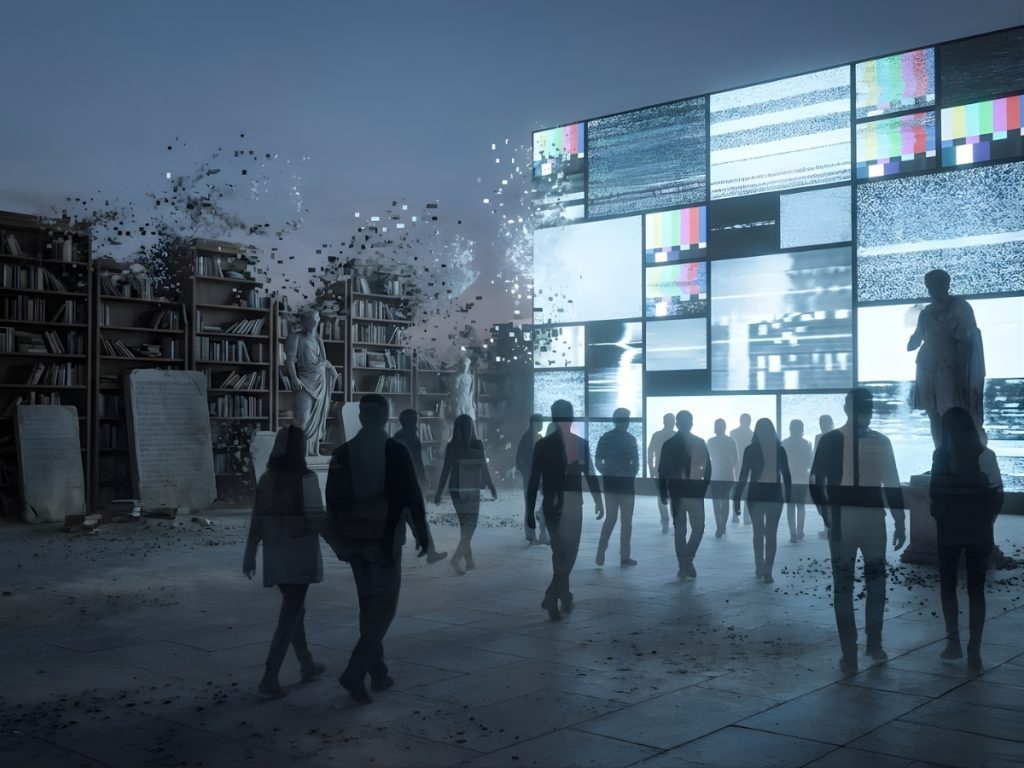
The long-term impact of the modern Roman circus is the erosion of civic capital and the normalisation of a “culture-death” characterised by a lack of historical and political awareness. As George Orwell depicted in 1984, a population that is “blinded by football, beer, reproduction and carelessness” is a population that fails to identify the reality in which it lives. When people are without “general ideas,” they focus their discontent on “petty specific grievances”—such as a bad referee call or a celebrity’s controversial tweet—while the “larger evils” invariably escape their notice.
The cultural shift from active citizens to passive audiences creates a society where “Americans no longer talk to each other, they entertain each other”. This loss of dialogue is the end of democratic accountability; as Neil Postman noted, “Who is prepared to take arms against a sea of amusements?” The “spiritual devastation” of the modern era comes not from an enemy with a hateful face, but from an “enemy with a smiling face” that gives us so much distraction that we are reduced to passivity and egoism.
Ultimately, the modern rRomancircus thrives because it addresses the “human hungers” that bread and circuses can never truly appease—the desire for community, meaning, and purpose. By hijacking these desires and channelling them into the spectacle, the system ensures its own survival at the expense of human flourishing. Awareness of this dynamic is the first step toward reclaiming critical thinking; as the fish in the murky ocean must learn to see the bait for what it is, the modern citizen mustrecognisee that the “excitement of the games” is often the very thing shackling them to an unequal and unexamined reality.
Related Topics on Wondopedia
This discussion connects closely with other core themes explored on Wondopedia, including how historical patterns of power and control continue to shape modern societies, and how facts and documented realities are often obscured by spectacle, distraction, and media noise. Exploring these related topics helps place the modern Roman circus within a wider cultural and analytical context.
Conclusion: Reclaiming the Public Mind

The analysis of the modern Roman circus reveals a system designed to maintain social stability through the systematic subversion of public attention. From the historical foundations of panem et circenses in ancient Rome to the digital “brain rot” of the 21st century, the logic of the spectacle remains consistent: provide for the most immediate or base requirements of a populace through diversion and distraction, and they will abdicate their civic duties and political liberty.
Professional sports and modern entertainment culture serve as the primary arenas for this control, normalising astronomical wealth inequality and creating tribal rivalries that prevent collective action. Meanwhile, a commercial media apparatus operates through filters that prioritise entertainment over information, manufacturing consent for the status quo and burying substantive political issues under a mountain of trivial content.
To break free from the modern Roman circus, society must foster a renewed culture of critical thinking and civic awareness. This involves recognising the “dopamine-driven cycles” of digital platforms and the “manufactured outrage” of media outlets as tools of social control. As Marcus Tullius Cicero reportedly argued, the “evil” is not in the entertainment itself, but in the willingness of the people to sell their rights as free men for “full bellies and the excitement of the games”. True freedom requires the capacity to identify the reality in which one lives and the discipline to choose sustained civic attention over the fleeting pleasure of the spectacle.
📚 References / Bibliography
1. Panem et Circenses & Roman Political Control
- Bread and circuses. Wikipedia. Retrieved January 19, 2026, from https://en.wikipedia.org/wiki/Bread_and_circuses
- Panem et Circenses (Bread and Circuses). Mercer County Community College. Retrieved January 19, 2026, from https://www.mccc.edu/pdf/arc141/Bread%20&%20Circuses%20(Panem%20et%20Circenses).pdf
- Panem et circenses – Bread and circuses. History Bibliotheca. Retrieved January 19, 2026, from https://historybibliotheca.com/panem-et-circenses-bread-and-circuses/
- Panem Et Circenses Explained. Innovate Tech Hub. Retrieved January 19, 2026, from https://webapp-new.itlab.stanford.edu/panem-et-circenses
- The Roman Circus Strategy. Scribd. Retrieved January 19, 2026, from https://www.scribd.com/document/851946698/The-Roman-Circus-Strategy
2. Media, Propaganda & Manufacturing Consent
- Manufacturing Consent. Wikipedia. Retrieved January 19, 2026, from https://en.wikipedia.org/wiki/Manufacturing_Consent
- Forsyth, S. The Propaganda Model According to Noam Chomsky and Edward Herman. Medium. Retrieved January 19, 2026, from https://medium.com/@scottbforsyth/edward-s-herman-and-noam-chomskys-propaganda-model-3f89e89c6265
- (Still) Manufacturing Consent. Jacobin. Retrieved January 19, 2026, from https://jacobin.com/2018/10/matt-taibbi-interview-fairway-manufacturing-consent
- CMV: Noam Chomsky’s core concept in Manufacturing Consent is contrived. Reddit. Retrieved January 19, 2026, from https://www.reddit.com/r/changemyview/comments/1enp5dt/
3. Society of the Spectacle & Cultural Critique
- Debord, G. The Society of the Spectacle. Marxists Internet Archive. Retrieved January 19, 2026, from https://www.marxists.org/reference/archive/debord/society.htm
- An Illustrated Guide to Guy Debord’s The Society of the Spectacle. Hyperallergic. Retrieved January 19, 2026, from https://hyperallergic.com/an-illustrated-guide-to-guy-debords-the-society-of-the-spectacle/
- Social Media and the Society of the Spectacle. CounterPunch. Retrieved January 19, 2026, from https://www.counterpunch.org/2019/05/01/social-media-and-the-society-of-the-spectacle/
- Commentary on Debord’s The Society of the Spectacle. Medium. Retrieved January 19, 2026, from https://thedangerousmaybe.medium.com/commentary-on-debords-the-society-of-the-spectacle-chapter-1-37b2e105614a
4. Sport as Modern Roman Circus
- Bread and Circuses: How Sport Distracts Modern Society. Medium. Retrieved January 19, 2026, from https://medium.com/@nicowriter/unity-or-distraction-how-modern-sport-distracts-us-from-what-really-matters-dae683dbc391
- Modern Gladiators: The Very American Sport of Football. NYU Politics Society. Retrieved January 19, 2026, from https://www.politicsatnyu.org/zeitgeist/2023/10/modern-gladiators-the-very-american-sport-of-football/
- Sports at the vanguard of labour market policy. IZA World of Labour. Retrieved January 19, 2026, from https://wol.iza.org/articles/sports-at-the-vanguard-of-labor-market-policy/long
5. Economic Inequality & Salary Disparity
- Wealth inequality in the United States. Wikipedia. Retrieved January 19, 2026, from https://en.wikipedia.org/wiki/Wealth_inequality_in_the_United_States
- Salary Disparity and Team Performance. University of Tennessee. Retrieved January 19, 2026, from https://trace.tennessee.edu/cgi/viewcontent.cgi?article=1549&context=jasm
- NFL Demographics 2025. Quantumrun Foresight. Retrieved January 19, 2026, from https://www.quantumrun.com/consulting/nfl-demographics/
- Josh Allen and Bo Nix’s Net Worth Comparison Times of India. Retrieved January 19, 2026, from https://timesofindia.indiatimes.com/
6. Digital Distraction, Brain Rot & Cognition
- The Negative Impact of Brain Rot on Your Results at Work. CAKE.com. Retrieved January 19, 2026, from https://cake.com/blog/brain-rot-hinders-productivity-performance/
- Demystifying the New Dilemma of Brain Rot in the Digital Era. NIH. Retrieved January 19, 2026, from https://pmc.ncbi.nlm.nih.gov/articles/PMC11939997/
- Your brain on scroll. SFI Health. Retrieved January 19, 2026, from https://sfihealth.com/news/your-brain-on-scroll-how-endless-content-is-reshaping-attention-thinking-and-memory
- How Social Media Is Affecting Our Critical Thinking Ability. Stafford Global. Retrieved January 19, 2026, from https://www.staffordglobal.org/blog/social-media-critical-thinking/
7. Philosophical & Literary References
- Orwell, G. 1984. Retrieved January 19, 2026, from https://www.abhafoundation.org/assets/books/html/1984/48.html
- Does current society resemble Orwell’s 1984? ICRP. Retrieved January 19, 2026, from http://culturalrelations.org/
- Postman, N. Amusing Ourselves to Death (Quotes). Goodreads. Retrieved January 19, 2026
- Cicero. On Bread and Circuses (quoted). Reddit. Retrieved January 19, 2026